Month: July 2026

  • How Businesses Can Get Featured in AI-Powered Search Results

    How Businesses Can Get Featured in AI-Powered Search Results

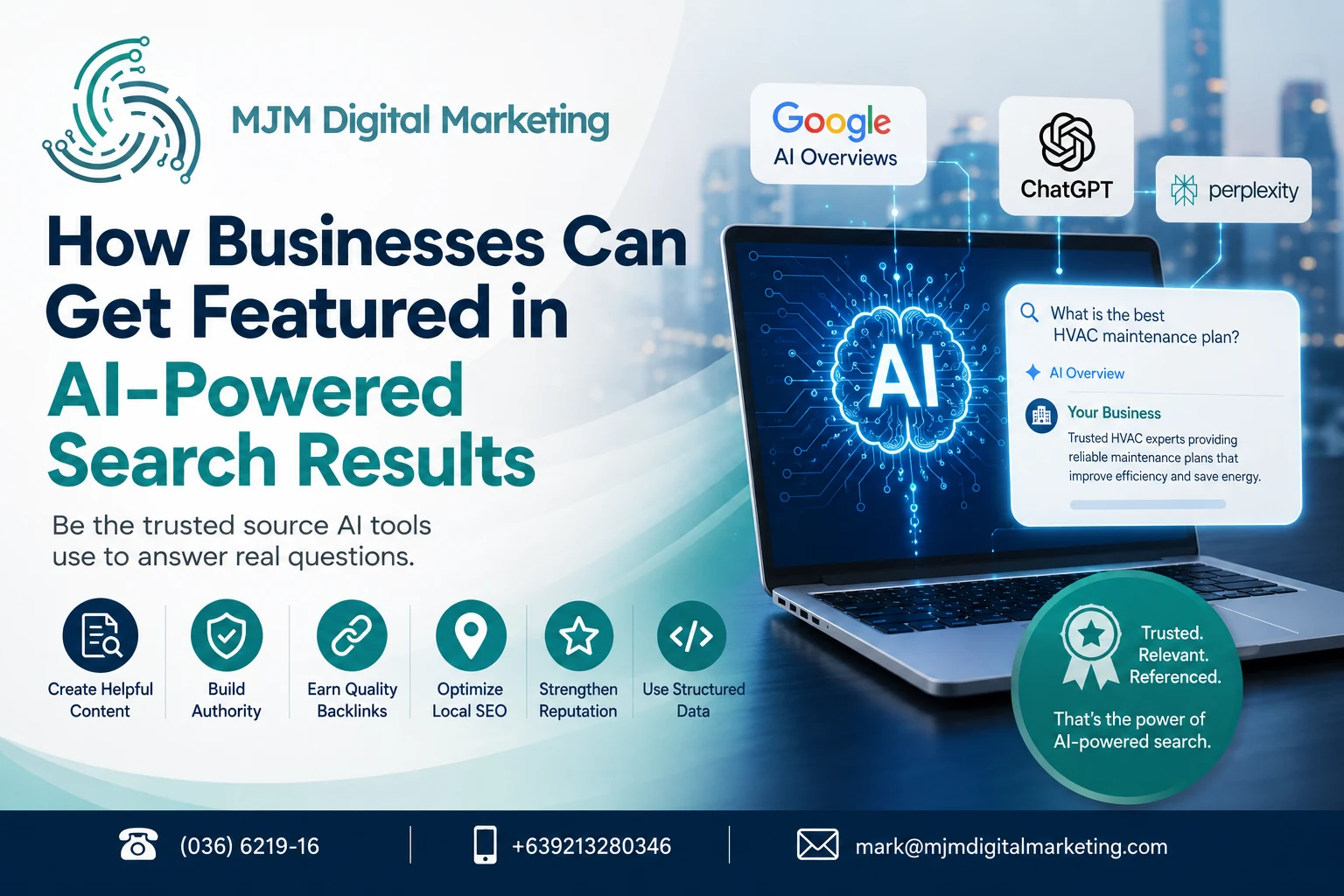
    Search is evolving rapidly. Traditional search engine rankings are still important, but artificial intelligence is changing how users find information online. Tools like Google AI Overviews, ChatGPT, Perplexity, and other AI-powered search platforms now generate direct answers to user questions, often pulling information from trusted websites, brands, and authoritative sources.

    For businesses, this creates a new opportunity. Instead of only competing for clicks and rankings, brands can now position themselves as trusted sources that AI systems reference when generating answers. The businesses that adapt early will gain greater visibility, credibility, and customer trust.

    How can businesses get featured in AI-powered search results?

    Getting featured in AI-powered search results requires more than traditional keyword optimization. AI systems are designed to understand context, evaluate authority, and deliver the most helpful answers to users.

    Businesses can improve their chances of being featured by:

    • Publishing accurate and informative content that directly answers user questions.
    • Demonstrating expertise in their industry through educational resources.
    • Maintaining a strong online presence across trusted websites.
    • Earning quality backlinks from authoritative sources.
    • Keeping business information consistent across the web.
    • Using structured data to help search engines understand content.

    AI search engines look for content that provides value rather than content created solely for ranking purposes. Businesses that focus on helping users solve problems often have a better chance of being cited in AI-generated responses.

    What factors do AI search engines use to select brands and businesses as sources?

    AI-powered search engines analyze numerous signals before selecting sources for their answers. While the exact algorithms vary, most platforms prioritize trust, relevance, and authority.

    Some of the key factors include:

    Content Relevance

    AI systems want content that directly answers a user’s question. Pages that clearly address specific topics are more likely to be referenced.

    Industry Expertise

    Businesses that consistently publish content related to their area of expertise establish stronger topical authority. For example, a dental practice that regularly publishes educational dental content may be viewed as a more reliable source than a website with only a few general articles.

    Website Authority

    Strong backlink profiles, brand mentions, and positive online reputation signals contribute to website authority. AI systems often favor information from sources that are already trusted across the web.

    User Experience

    Fast-loading websites, mobile-friendly designs, and well-structured content improve the overall user experience, which can indirectly support visibility in AI-powered search environments.

    Accuracy and Trustworthiness

    Content supported by facts, data, and credible sources tends to perform better. AI models aim to provide users with reliable information, making accuracy a critical ranking factor.

    How can my brand appear in AI-generated answers from Google AI Overviews and ChatGPT?

    Google AI Overviews and ChatGPT do not simply pull information from websites with the highest rankings. Instead, they look for trustworthy content that effectively answers specific user queries.

    To increase your chances of appearing in AI-generated answers:

    • Create comprehensive content around your primary services and expertise.
    • Answer frequently asked questions in a clear and conversational format.
    • Build dedicated resource pages and educational guides.
    • Optimize local SEO if your business serves a specific geographic area.
    • Strengthen your online reputation through reviews and third-party mentions.
    • Maintain active and accurate business profiles across relevant platforms.

    Brands that become recognized authorities within their niche are more likely to be referenced by AI-powered systems. Consistency is important because AI tools often evaluate multiple sources before generating responses.

    How Businesses Can Get Featured in AI-Powered Search Results Middle

    What SEO strategies help businesses optimize for AI-powered search experiences?

    Many traditional SEO strategies remain valuable, but AI-powered search requires a broader focus on user intent and content quality.

    Focus on Topic Clusters

    Instead of targeting individual keywords alone, create interconnected content around core topics. This helps establish topical authority and demonstrates expertise.

    Optimize for Conversational Queries

    Users increasingly interact with AI tools using natural language questions. Content should include question-and-answer formats that mirror how people actually search.

    Examples include:

    • How does HVAC maintenance improve efficiency?
    • What should I expect during a dental implant procedure?
    • When should I replace my water heater?

    Build Strong E-E-A-T Signals

    Google emphasizes Experience, Expertise, Authoritativeness, and Trustworthiness (E-E-A-T). Businesses should highlight credentials, certifications, years of experience, and customer success stories.

    Improve Local SEO

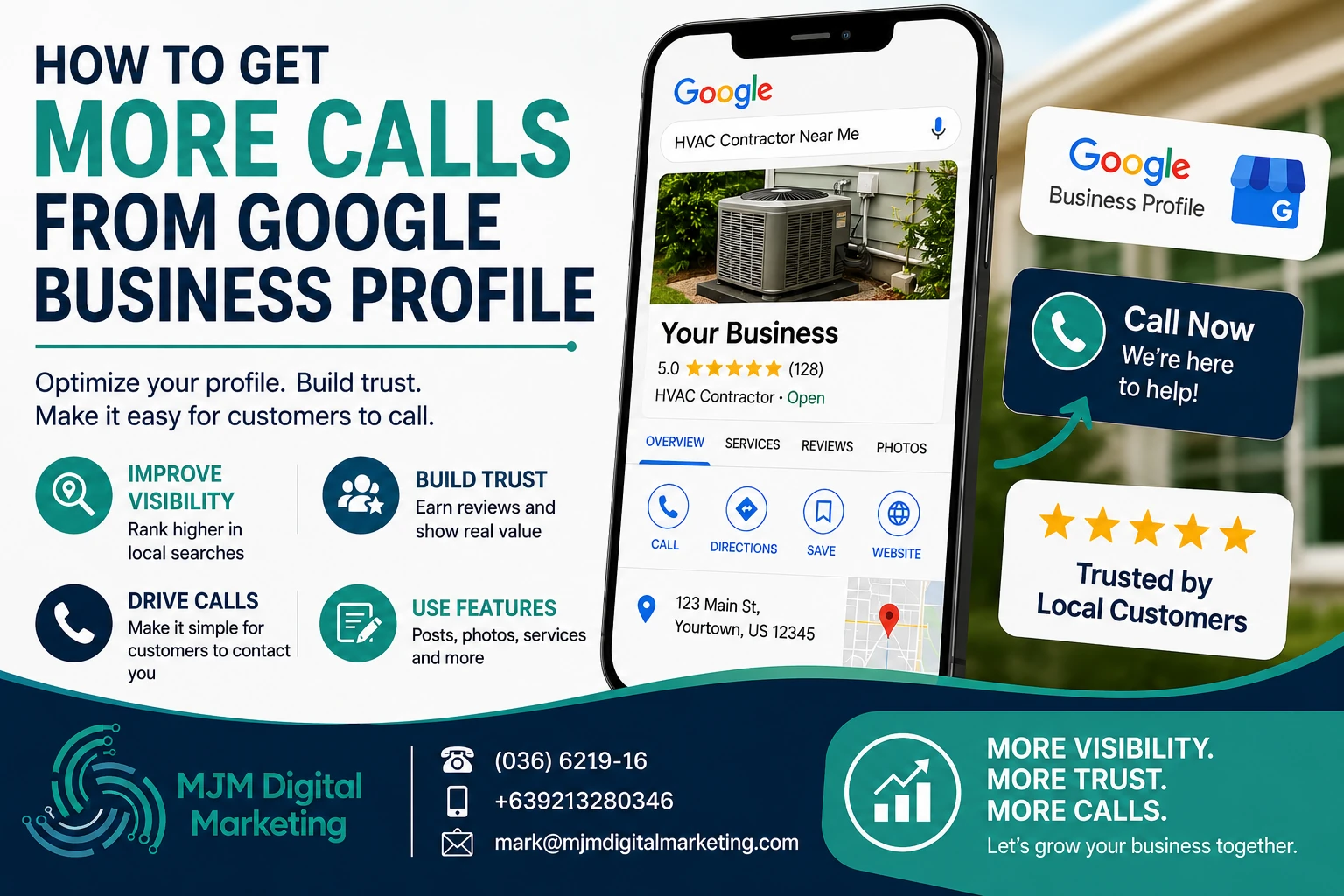
    For local businesses, optimizing Google Business Profiles, acquiring reviews, and maintaining citation consistency remain essential strategies for increasing visibility.

    Create Evergreen Content

    Evergreen content remains valuable over time and provides AI systems with reliable resources that continue answering user questions long after publication.

    How do businesses improve their chances of being cited in AI-generated search results?

    Being cited by AI-generated search platforms requires building trust across multiple digital channels.

    Businesses can improve citation opportunities by:

    • Publishing original research and unique insights.
    • Creating detailed service pages that answer customer concerns.
    • Producing data-driven articles and case studies.
    • Maintaining active business listings.
    • Earning mentions from industry publications.
    • Securing quality backlinks from authoritative websites.
    • Regularly updating outdated content.

    Businesses should also monitor emerging search trends and identify the types of questions customers ask most frequently. Creating content that addresses these questions directly can significantly improve visibility.

    Another effective strategy is creating content that serves as a definitive resource on a topic. AI systems often favor comprehensive content that thoroughly explains a subject instead of brief, surface-level articles.

    What role do content quality, authority, and structured data play in AI search visibility?

    Content quality, authority, and structured data are among the most influential elements in AI-powered search visibility.

    Content Quality

    High-quality content demonstrates expertise, answers user questions clearly, and provides actionable information. AI systems prioritize content that helps users make informed decisions.

    Strong content should be:

    • Accurate
    • Well-organized
    • Easy to read
    • Updated regularly
    • Written with the user in mind

    Authority

    Authority is built over time through consistent publishing, positive reviews, quality backlinks, media mentions, and industry recognition.

    Businesses with stronger authority signals are more likely to be trusted by both traditional search engines and AI-powered platforms.

    Structured Data

    Structured data helps search engines understand the meaning and context of website content.

    Schema markup can provide information about:

    • Business details
    • Services
    • Products
    • Reviews
    • FAQs
    • Articles
    • Locations

    When properly implemented, structured data helps AI systems interpret content more accurately, increasing the likelihood of inclusion in search results and AI-generated responses.

    Position Your Business for the Future of Search

    AI-powered search is transforming how customers discover businesses online. As search platforms continue evolving, brands that prioritize quality content, topical authority, user experience, and technical SEO will have the greatest opportunity to stand out.

    At MJM Digital Marketing, we help businesses adapt to the changing search landscape by developing SEO strategies designed for both traditional rankings and emerging AI-powered search experiences. Our approach focuses on creating authoritative content, strengthening online visibility, and positioning brands as trusted sources that customers and AI systems can rely on. Investing in these strategies today can help your business remain competitive and visible as the future of search continues to evolve.

  • Google AI Overviews: Is Your Business Losing Customers?

    Google AI Overviews: Is Your Business Losing Customers?

    Imagine spending years building your website, investing in SEO, collecting reviews, writing blogs, and climbing Google’s rankings, only to discover that Google now answers the customer’s question before they ever click your website.

    If that sounds slightly terrifying, you’re not alone.

    The introduction of Google AI Overviews has created excitement, confusion, curiosity, and a healthy amount of panic among business owners. Some companies are seeing changes in website traffic. Others are noticing shifts in click-through rates. And many are asking the same question:

    “Is Google helping my business or quietly stealing my customers?”

    The answer is a little more complicated than a simple yes or no.

    AI Overviews represent one of the biggest changes to Google Search in years. They are changing how people discover information, evaluate businesses, and make purchasing decisions. For some companies, this shift presents new opportunities. For others, it may create challenges that cannot be ignored.

    Let’s explore what AI Overviews mean for businesses and whether they should be viewed as a threat, an opportunity, or a bit of both.

    What Are Google AI Overviews And How Do They Affect Local Businesses?

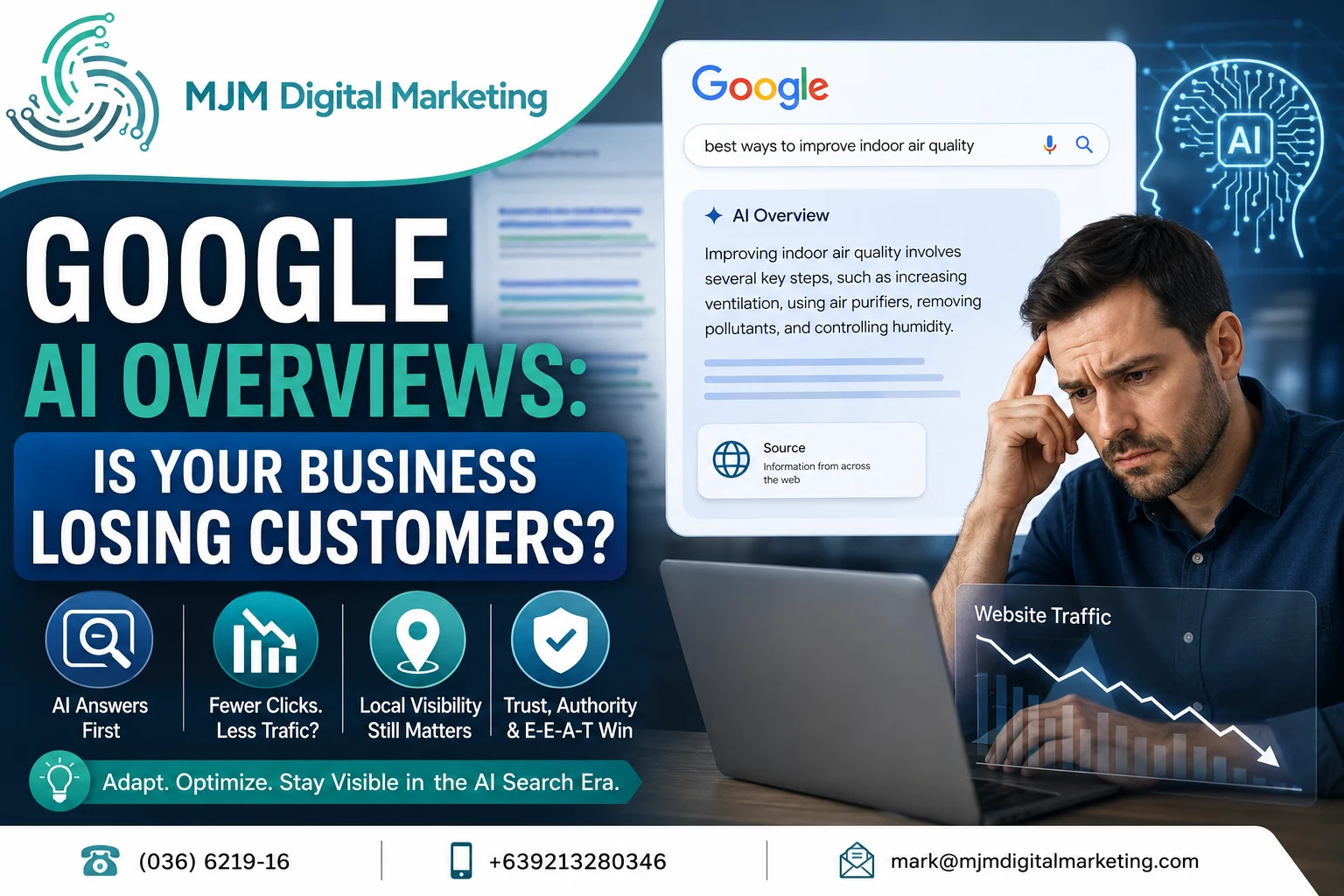
    Google AI Overviews are AI-generated summaries that appear at the top of certain search results.

    Instead of showing only traditional blue links, Google now uses artificial intelligence to create a concise answer that pulls information from multiple sources across the web.

    For users, this can be incredibly convenient.

    A person searching:

    • How much does roof replacement cost?
    • What are signs of a failing water heater?
    • Best ways to improve indoor air quality?

    may receive an AI-generated explanation before ever visiting a website.

    For local businesses, this changes the customer journey.

    Previously, users often clicked several websites before making a decision. Now, some users may get enough information directly from Google’s AI-generated response to stop searching altogether.

    This doesn’t necessarily mean businesses are doomed.

    However, it does mean visibility is becoming more competitive.

    Businesses that provide valuable, trustworthy, and authoritative content have a better chance of being referenced within AI-generated responses. Those that rely on outdated SEO tactics or thin content may find themselves becoming increasingly invisible.

    In my opinion, AI Overviews are not replacing local SEO. They are raising the standard for it.

    Why Is My Business Getting Fewer Clicks Since Google AI Overviews Launched?

    This is one of the most common concerns business owners have raised since AI-generated search experiences became more widespread.

    The simple explanation is that users are getting answers faster.

    Think about how people behaved five years ago.

    Someone searched a question.

    They clicked a result.

    They read an article.

    They gathered information.

    Today, Google often provides an answer immediately.

    As a result:

    • Some informational searches generate fewer clicks
    • Users may spend less time browsing multiple websites
    • Search journeys become shorter
    • Businesses receive fewer opportunities to attract visitors

    This phenomenon is often referred to as a zero-click search.

    The user gets what they need without clicking anything.

    While that may sound alarming, it is important to recognize that not all clicks are equally valuable.

    For example:

    A person searching “What is SEO?” may never become a customer.

    A person searching “SEO agency near me” still has strong purchase intent and is more likely to visit websites, compare options, and contact businesses.

    The businesses feeling the biggest impact are often those relying heavily on informational content without a strategy for converting readers into leads.

    Traffic may decrease.

    Qualified opportunities do not necessarily have to decrease with it.

    Google AI Overviews Is Your Business Losing Customers Middle

    Which AI Technology Powers Google Search And AI Overviews?

    Google AI Overviews are powered by Google’s advanced artificial intelligence models, including technology developed through the Gemini family of AI systems.

    Google combines:

    • Large language models
    • Search algorithms
    • Knowledge graphs
    • Ranking systems
    • Real-time information retrieval

    to generate AI-powered answers.

    What makes AI Overviews different from a chatbot is that they are integrated directly into Google’s search ecosystem.

    The AI is not simply guessing.

    It attempts to pull information from trusted sources and synthesize answers based on Google’s understanding of the query.

    That said, AI systems are not perfect.

    They occasionally misunderstand context, misinterpret information, or provide incomplete answers.

    This is one reason why Google continues emphasizing quality content, authority signals, and trustworthy sources.

    Businesses that demonstrate expertise and credibility are more likely to become part of the information ecosystem that AI systems rely on.

    In other words, Google’s AI still needs sources.

    The businesses that become trusted sources gain an important advantage.

    Can Google AI Overviews Reduce Website Traffic And Customer Inquiries?

    The honest answer is yes.

    But the full answer is more nuanced.

    AI Overviews can reduce website traffic in certain situations.

    This is particularly true for content that answers simple questions.

    For example:

    • Definitions
    • Basic explanations
    • General educational topics
    • Common how-to questions

    When Google provides the answer immediately, fewer users may click through.

    However, customer inquiries are a different story.

    Businesses that focus on transactional and local intent often continue generating leads because users still need to:

    • Contact someone
    • Request a quote
    • Schedule a service
    • Purchase a product
    • Book an appointment

    AI can answer a question.

    AI cannot fix a leaking roof.

    AI can explain how a dentist performs a procedure.

    AI cannot clean someone’s teeth.

    The businesses most vulnerable to traffic declines are those that depend entirely on informational searches without creating a path toward meaningful engagement.

    The businesses most likely to succeed are those that:

    • Build trust
    • Establish authority
    • Create helpful content
    • Optimize local visibility
    • Develop strong conversion strategies

    Traffic may evolve, but customer needs remain remarkably human.

    How Can Businesses Optimize Their Content To Appear In Google AI Overviews?

    This is where things become interesting.

    Instead of fighting AI Overviews, businesses should focus on becoming part of them.

    Google’s AI systems tend to favor content that is:

    • Helpful
    • Accurate
    • Well-structured
    • Comprehensive
    • Trustworthy

    Businesses can improve their chances by creating content that directly answers user questions.

    Some effective strategies include:

    Focus On Clear Answers

    Users and AI systems both appreciate clarity.

    Answer questions directly before expanding on details.

    Build Strong E-E-A-T Signals

    Google values:

    • Experience
    • Expertise
    • Authoritativeness
    • Trustworthiness

    Include:

    • Author information
    • Credentials
    • Real-world examples
    • Case studies
    • Testimonials

    Create Topic Depth

    Instead of writing shallow articles, create comprehensive resources that fully address a topic.

    Depth helps establish authority.

    Use Structured Content

    Well-organized content often performs better.

    Consider:

    • Headings
    • Bullet points
    • FAQs
    • Tables
    • Step-by-step explanations

    Maintain Content Accuracy

    Outdated information can reduce credibility.

    Regular updates help keep content relevant.

    The goal is not simply ranking anymore.

    The goal is becoming a source that Google’s AI trusts enough to reference.

    That is a different mindset, but an important one.

    What Are The Potential Risks Of AI In Google Search For Small Businesses?

    Like any technological shift, AI-powered search creates both winners and losers.

    Small businesses face several potential risks.

    Reduced Organic Clicks

    As AI answers more questions directly, some websites may experience lower traffic.

    Increased Competition

    Businesses are no longer competing only for rankings.

    They are competing for inclusion in AI-generated responses.

    Greater Importance Of Authority

    Companies with stronger online reputations may gain disproportionate visibility.

    Smaller businesses that neglect trust-building may struggle.

    Information Oversimplification

    AI-generated summaries sometimes reduce complex topics into simplified answers.

    Businesses may lose opportunities to educate potential customers fully.

    Dependence On Third-Party Platforms

    Relying solely on search traffic becomes riskier when search experiences evolve rapidly.

    This is why diversification matters.

    Businesses should continue investing in:

    • Email marketing
    • Social media
    • Local SEO
    • Reviews
    • Referral programs
    • Brand building

    The strongest businesses rarely depend on a single source of visibility.

    At the same time, there are opportunities.

    Small businesses that create exceptional content can compete with much larger organizations because AI systems prioritize usefulness and trust rather than company size alone.

    The playing field is changing, but it has not become unwinnable.

    The Future Of Search Belongs To Businesses That Adapt

    Every major change in search has sparked fear.

    • Mobile search
    • Voice search
    • Featured snippets
    • Local packs
    • AI Overviews

    Yet the businesses that consistently succeed are not the ones resisting change. They are the ones adapting to it.

    Google AI Overviews are reshaping how people discover information, but they are not eliminating the need for trustworthy businesses. Customers still need services. They still need products. They still need experts.

    The difference is that earning visibility now requires more than ranking for keywords.

    It requires authority.

    It requires credibility.

    It requires creating content that deserves to be trusted.

    Businesses that embrace this reality will continue finding opportunities, even as search evolves.

    The question is not whether AI is changing Google.

    The question is whether your business is changing with it.

    Don’t Let AI Rewrite Your Competitive Advantage

    At MJM Digital Marketing, we help businesses navigate the future of search without losing sight of what matters most: attracting real customers. As Google AI Overviews continue reshaping online visibility, our team focuses on building authority, strengthening E-E-A-T signals, optimizing content for AI-driven search experiences, and creating SEO strategies designed for long-term growth.

    If you’re concerned about declining traffic, changing search behavior, or staying visible in an AI-powered world, let’s create a strategy that keeps your business in front of the people who matter most. The future of search is already here. Let’s make sure your business is part of the conversation instead of watching it happen from the sidelines.

  • E-E-A-T Explained: Why Google Trusts Some Businesses More Than Others

    E-E-A-T Explained: Why Google Trusts Some Businesses More Than Others

    Some businesses seem to have Google wrapped around their finger.

    They publish a page, and it climbs. They show up in search results, Google Maps, featured snippets, and sometimes even AI-generated answers. Meanwhile, another business with similar services, similar pricing, and maybe even a better-looking website is stuck somewhere on page three, quietly wondering what went wrong.

    The difference often comes down to trust.

    Google does not want to recommend just any business. It wants to recommend businesses that appear helpful, credible, experienced, and reliable. That is where E-E-A-T comes in.

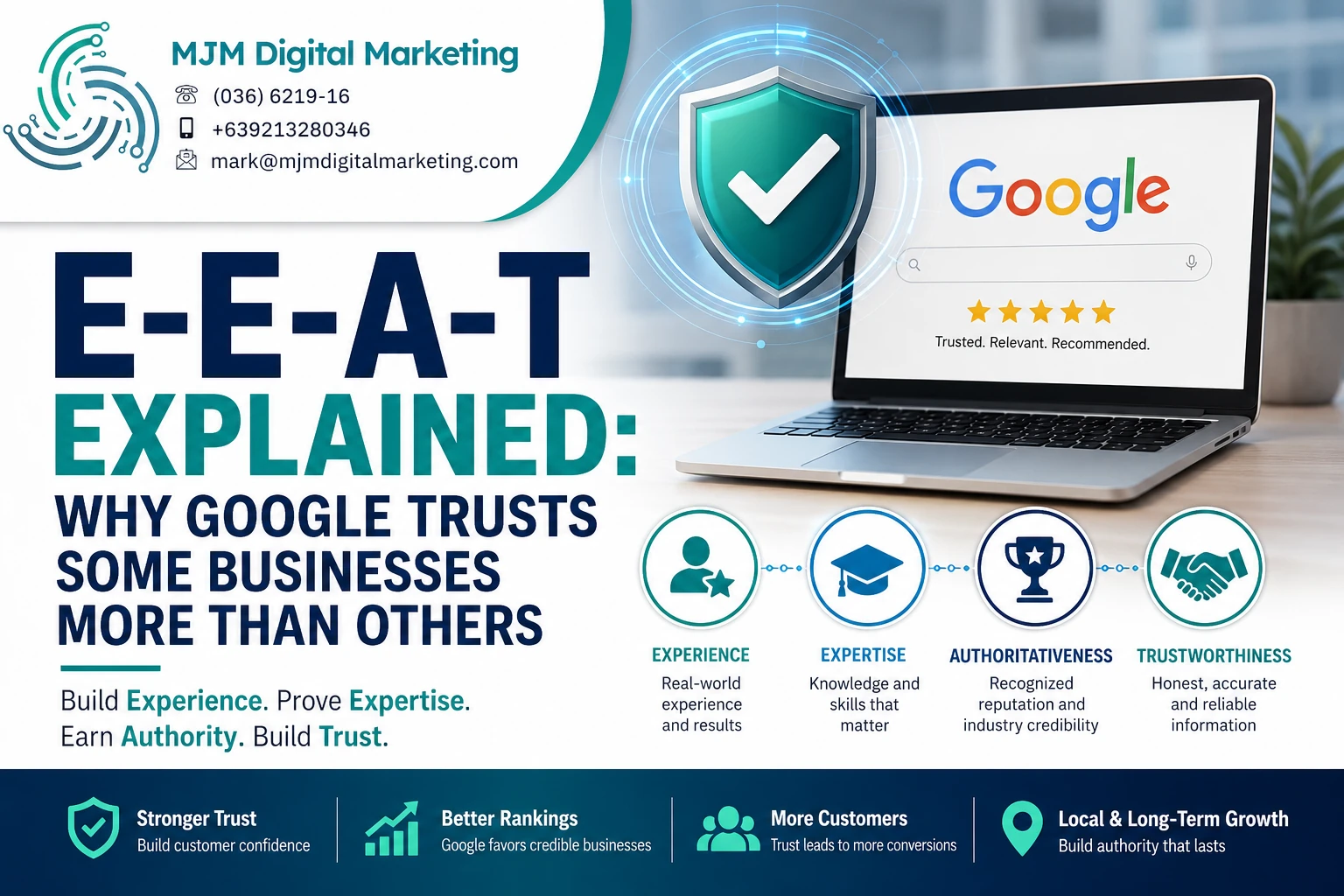
    E-E-A-T stands for Experience, Expertise, Authoritativeness, and Trustworthiness. It is not a magic ranking button. It is not a plugin you install on WordPress and suddenly hear angels singing. It is a framework Google uses to evaluate content quality and credibility, especially when the information could affect someone’s health, finances, safety, or major life decisions.

    In plain English, E-E-A-T asks: “Should people trust this business?”

    And honestly, that is a fair question. The internet is full of websites making big claims. Everyone says they are the best. Everyone says they are trusted. Everyone has “quality service” slapped somewhere on the homepage like a decorative throw pillow.

    Google wants more than claims. It wants proof.

    Why Is E-E-A-T Important For Google Search Rankings?

    E-E-A-T matters because Google’s job is not simply to find content. Google’s job is to find content worth showing.

    That distinction is huge.

    A website can have keywords, headings, meta descriptions, and service pages, but if it does not demonstrate credibility, it may struggle to compete against businesses with stronger trust signals.

    Think of Google like a cautious friend recommending a contractor. It is not going to say, “Sure, hire this random company with no reviews, no clear contact information, no proof of experience, and a blog written like it was assembled in a basement at 2 a.m.”

    Google wants confidence.

    E-E-A-T helps create that confidence by showing that your business has:

    • Real-world experience
    • Industry knowledge
    • Public credibility
    • Positive reputation
    • Clear and honest information
    • Reliable website content

    This is especially important for industries like healthcare, legal services, finance, home services, wellness, insurance, and other fields where bad advice can cause real problems.

    But even if you run a landscaping company, dental office, HVAC business, or local shop, E-E-A-T still matters. Customers want to know they are choosing someone who knows what they are doing. Google wants the same thing.

    A business with strong E-E-A-T looks less risky to recommend. And in search, being the safer recommendation is a powerful advantage.

    How Does Google Determine Whether A Business Is Trustworthy?

    Google does not sit in a chair with a cup of coffee and personally decide whether it likes your business. It uses signals.

    Some signals are on your website. Others come from the wider internet.

    Trustworthiness can be influenced by things like:

    • Clear business name, address, and phone number
    • Secure website connection
    • Transparent service information
    • Real customer reviews
    • Professional website design
    • Author bios or team information
    • Accurate content
    • Updated pages
    • Local citations
    • Backlinks from reputable websites
    • Consistent brand mentions

    In my opinion, many businesses underestimate how much basic credibility matters.

    For example, if your website has no phone number in the header, no About page, no real photos, no testimonials, and service pages thinner than a fast-food napkin, you are asking visitors and Google to trust you with very little evidence.

    That is a tough sell.

    Trust is built in layers. One review helps. A detailed About page helps. A professional website helps. Local mentions help. Case studies help. A complete Google Business Profile helps.

    Individually, each signal may seem small. Together, they create a digital reputation.

    And Google loves patterns.

    If the pattern across the internet says your business is legitimate, active, and valued by customers, that is a strong foundation for better visibility.

    What Role Does Experience Play In Google’s E-E-A-T Guidelines?

    Experience is the first “E” in E-E-A-T, and it has become increasingly important.

    Why?

    Because people are tired of generic content.

    They do not want an article about roof repair written by someone who has clearly never seen a roof outside of stock photography. They do not want dental advice that sounds like it was copied from five other dental websites. They do not want a plumbing page that explains water as if humanity just discovered pipes last Tuesday.

    Experience means your content shows real familiarity with the subject.

    For a business, this can appear through:

    • Before-and-after project photos
    • Case studies
    • Customer stories
    • Service-specific examples
    • Team credentials
    • Years in business
    • Local project details
    • Firsthand tips and recommendations

    Experience adds texture.

    Instead of saying, “We provide high-quality HVAC services,” a stronger page might explain how your technicians diagnose uneven cooling in older homes, what issues they commonly see in your local climate, and how homeowners can spot early warning signs before a system fails.

    That feels real.

    Google wants content that helps users. Users trust content that feels grounded in actual experience.

    The more your website proves that you have done the work, solved the problems, and served real customers, the stronger your E-E-A-T becomes.

    E-E-A-T Explained Why Google Trusts Some Businesses More Than Others Middle

    Why Do Some Businesses Rank Higher Than Their Competitors Despite Having Similar Services?

    This is where business owners often get frustrated.

    Two companies may offer the same service in the same city, yet one consistently ranks higher.

    Why?

    Because Google is not only comparing services. It is comparing trust signals.

    Let’s say two dental clinics both offer cosmetic dentistry.

    Clinic A has:

    • Detailed service pages
    • Doctor bios
    • Patient reviews
    • Before-and-after examples
    • Local citations
    • Educational blog content
    • A fast, mobile-friendly website

    Clinic B has:

    • A homepage
    • A short services page
    • A phone number
    • Three old reviews
    • A website last updated during the emotional era of low-rise jeans

    Both offer the same service, but they do not look equally trustworthy online.

    Google is more likely to favor the business that provides more proof.

    This is why “we offer that too” is not enough. Your website has to clearly show what you offer, why you are qualified, and why customers trust you.

    Some businesses rank higher because they have spent years building authority. Others rank higher because they consistently publish helpful content. Some have stronger reviews. Some have better backlinks. Some simply make it easier for Google to understand who they are and what they do.

    Ranking is rarely about one factor. It is usually the result of many small advantages stacking up over time.

    How Can A Business Improve Its E-E-A-T And Build Online Credibility?

    Improving E-E-A-T is not about pretending to be trustworthy. It is about making your trustworthiness visible.

    A great business that hides its credibility online is like a five-star chef cooking in a dark room. The talent may be there, but nobody can see it.

    Here are smart ways to improve E-E-A-T:

    Strengthen Your About Page

    Your About page should not read like a corporate shrug.

    Include:

    • Company history
    • Team information
    • Mission and values
    • Credentials
    • Service experience
    • Local involvement

    People want to know who they are hiring.

    Add Author Or Expert Information

    If you publish blogs, guides, or educational content, show who created or reviewed the content.

    This is especially useful for professional industries where expertise matters.

    Showcase Real Reviews

    Reviews are modern trust currency.

    Use them across your website, not just on your Google Business Profile.

    Create Case Studies

    Show real problems and real outcomes.

    A good case study can prove expertise faster than five paragraphs of self-praise.

    Keep Content Accurate And Updated

    Outdated content can weaken trust.

    Review important pages regularly and refresh details when needed.

    Earn Quality Backlinks

    Links from reputable websites act like digital recommendations.

    Local publications, industry associations, partner websites, and community organizations can all help build authority.

    Use Real Photos

    Stock photos have their place, but real photos build stronger trust.

    Show your team, office, vehicles, projects, products, or work environment when possible.

    The goal is simple: make it easy for customers and search engines to believe you.

    What Signals Does Google Use To Measure Trust, Expertise, And Authority?

    Google uses many signals to understand credibility. Some are direct. Others are indirect.

    Important signals may include:

    • High-quality website content
    • Helpful answers to user questions
    • Positive online reviews
    • Relevant backlinks
    • Brand mentions
    • Accurate business listings
    • Strong internal linking
    • Clear contact information
    • Secure website experience
    • Consistent publishing
    • Professional credentials
    • Customer engagement
    • Local relevance

    One overlooked signal is content depth.

    Thin pages rarely build confidence. If your service page only says, “We provide reliable service at affordable prices,” that does not tell Google or customers much.

    A stronger page explains:

    • What the service includes
    • Who it helps
    • Common problems it solves
    • Why professional help matters
    • What makes your process different
    • Frequently asked questions
    • Proof of successful outcomes

    Another important signal is consistency.

    If your website says one thing, your Google Business Profile says another, and directory listings show outdated information, that creates confusion. Trust requires alignment.

    Google does not need your business to be famous worldwide. But it does need enough evidence to understand that your business is legitimate, relevant, and dependable.

    Trust Is The Real SEO Advantage

    E-E-A-T is not just an SEO concept. It is a business concept.

    The companies that win online are often the companies that make trust easy to see.

    They do not rely on empty claims. They provide proof. They show experience. They publish helpful content. They earn reviews. They build authority. They make their websites useful instead of just decorative.

    In 2026 and beyond, this matters more than ever.

    AI search, local search, organic rankings, and customer decision-making are all becoming more trust-driven. People do not just want options. They want confidence.

    And Google is trying to deliver that confidence.

    So if your competitors seem to earn better rankings, more visibility, and more clicks, do not just ask what keywords they are using. Ask what trust signals they have built.

    That is where the real gap often lives.

    Turn Your Credibility Into A Ranking Advantage

    At MJM Digital Marketing, we help businesses do more than “look optimized.” We help them build the kind of online credibility that search engines and real customers can trust.

    If your website has the expertise but not the visibility, or your business has the experience but not the digital proof, our team can help strengthen your E-E-A-T through smarter SEO, content strategy, local optimization, and authority-building campaigns. Let’s turn what makes your business trustworthy into the reason Google and your customers choose you first.